
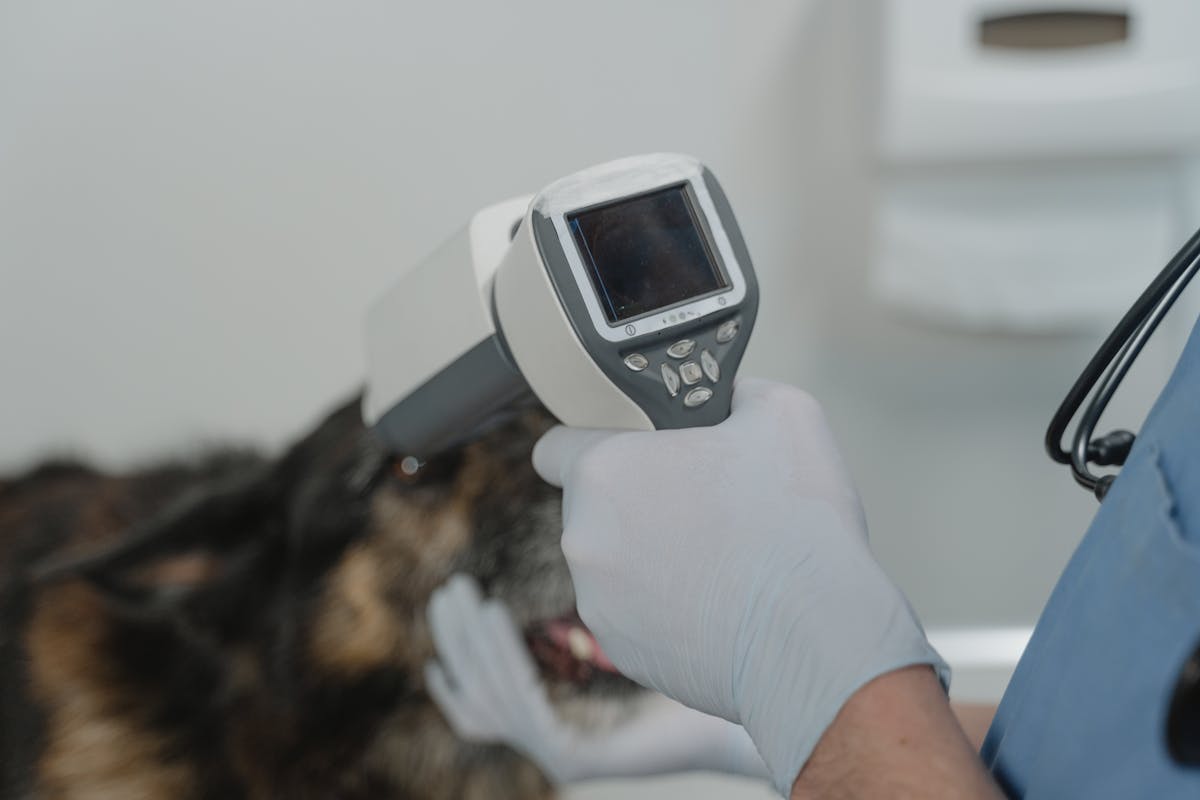
Photo: Tima Miroshnichenko via Pexels
Veterinary practice SBA loans are the best-performing industry category in the SBA portfolio — a 0.18% charge-off rate (one-seventh the SBA average), a +40% YoY growth rate, and the highest average loan size of any major category at $1.2M. Practice acquisition dominates the use cases.
Answer 6 questions. Get matched with veterinary-practice-experienced SBA lenders.
Skip to program details →New to SBA? Start with SBA loan requirements.
SBA 7(a) loans to veterinary services (NAICS 541940), fiscal years 2020 through December 2025. Pulled from SBA FOIA 7(a) dataset.
SBA 7(a) handles most veterinary practice acquisitions and expansion needs. SBA 504 adds long-term fixed rates when real estate is part of the deal. Equipment financing is the non-SBA alternative for speed.
Right for: practice acquisitions (the dominant use), clinic buildouts, multi-location expansion.
Right for: buying the clinic building. Fixed long-term rates. Particularly valuable in veterinary given recession-resistant demand.
Right for: equipment upgrades, mobile vet unit buildout, working capital under $500K.
Right for: imaging, surgical equipment, diagnostic tools. Faster than SBA when equipment lifecycle is shorter than SBA amortization.
Veterinary practice SBA lending has the lowest charge-off rate of any major industry category in the SBA 7(a) portfolio: 0.18%, compared to 1.36% across all industries. One failed loan per 550 funded. The underlying dynamics explain why lenders treat veterinary files as among the most attractive SBA deals they can write.
Pet ownership and spending on pet health have grown through every recession of the past three decades. The human-animal bond is non-discretionary in a way that few consumer categories are. Pet parents defer their own medical care before they defer their dog’s. Lenders see this in the data: veterinary practice revenue held up through the 2008 recession, the 2020 pandemic, and the 2022-2023 inflation spike with remarkable stability.
Veterinary school graduations are capped by accreditation — there are roughly 30 accredited U.S. veterinary colleges graduating approximately 3,500 new veterinarians annually. Demand for veterinary services has grown faster than supply for over a decade, leaving existing practices with strong patient bases, limited competition, and pricing power. New practice formation doesn’t materially threaten incumbent practices the way it does in more crowded professional categories.
The +40% YoY growth in veterinary SBA lending reflects a real market dynamic: corporate veterinary consolidators — Mars-owned VCA and Banfield, IVC Evidensia, NVA, and several PE-backed buyers — are actively acquiring independent practices at elevated multiples. This has two effects on SBA lending. First, valuations have climbed, pushing typical deal sizes higher (average veterinary SBA loan is $1.2M, highest of any major category). Second, individual veterinarians buying practices from retiring owners compete with corporate bidders, and SBA 7(a) is the dominant individual-buyer financing path.
Franchise arrangements are rare in veterinary medicine at 1.47% of veterinary SBA loans — this is an overwhelmingly independent industry with strong corporate-consolidator activity. The dominant SBA loan types differ by practice format:
Small-animal general practices make up the bulk of SBA deals. Standard acquisition structure: buyer-veterinarian purchases the practice from a retiring owner, often with a 6-24 month transition period where the seller stays on to hand off patient relationships. SBA 7(a) funds the purchase price, buildout or equipment refresh, and working capital.
Specialty practices (emergency, internal medicine, oncology, surgery, ophthalmology) have higher capital intensity — CT, MRI, advanced surgical suites — and commonly require the highest-dollar SBA veterinary loans. Specialty referral practices also have more concentrated referral relationships with general-practice veterinarians, which lenders evaluate carefully.
Mobile and housecall practices have lower capital intensity and typically need smaller SBA loans for vehicle-mounted equipment and mobile-unit buildout. SBA 7(a) Small Loan (up to $500K) is often the right fit. Equine and large-animal practices are rarer in the data but underwrite similarly to small-animal specialty practices with additional vehicle and equipment considerations.
Veterinary practice charge-offs run at 0.18%%, compared to the SBA average of 1.36%% — a 0.13x ratio. This is the lowest charge-off rate of any major industry category in the SBA 7(a) portfolio. Combined with the +40% YoY growth and the highest-in-category average loan size, veterinary practices represent one of the most attractive lending opportunities in the SBA universe.
The practical implication for borrowers: specialist veterinary lenders actively compete for deals. Live Oak Banking leads the category by loan count, with several other banks (including bank-of-america-scale institutions) running dedicated veterinary practice lending programs. Matching to a specialist lender is less about gatekeeping and more about getting competitive pricing and fast closing. Generalist banks sometimes under-price these deals because they don’t recognize the category’s performance, but they also sometimes add unnecessary friction that a specialist wouldn’t.
What predicts the rare failures: inexperienced operators buying solo without a practice handoff, practices with heavy client concentration around the departing owner (clients leave when the selling vet does), and geographic markets where corporate consolidators have built reputational competitive advantages. Specialist lenders underwrite specifically around these risks.
For adjacent businesses: see our SBA pet care guide for boarding, grooming, daycare, and training operations — related to veterinary but with distinct underwriting (no veterinary licensure required, different facility patterns, higher franchise concentration).
The ten banks that have approved the most SBA 7(a) veterinary practice loans FY2020-2025. Pulled directly from SBA FOIA data. Loan count alone doesn’t capture lender fit for your specific deal — volume leaders and specialist fit can differ.
Top 10 lenders account for approximately 51.7% of all veterinary practice SBA 7(a) volume.
Specialist lender signal: Live Oak Banking Company is a recognized veterinary practice SBA specialist, highlighted in amber above. Specialist lenders close veterinary practice files faster and at better terms than generalist banks.
The eight states leading in veterinary practice SBA 7(a) approvals FY2020-2025. CA leads the next-largest state (FL) by roughly 1.05× on loan count; top 8 states account for roughly half of all national veterinary practice SBA volume.
California is the largest state for the best-performing SBA category (zero charge-offs across all 183 CA vet loans, $1.7M average deal size). More state-specific veterinary practice SBA guides will appear here as volume justifies the depth.
Adjacent SBA lending pages with shared underwriting mechanics or audience overlap for veterinary practice borrowers.
Veterinary practice SBA is a narrow specialty. The top ten lenders above handle a meaningful share of all veterinary practice 7(a) volume — matching there vs. a generalist branch is the difference between a clean 60-day close and a stalled file. See the broader SBA loans hub or SBA acquisition mechanics.
Match with veterinary practice SBA lenders →MMM does not originate SBA loans. Applications are processed through SBA-authorized lenders. Statistics above are sourced from the SBA FOIA 7(a) dataset, fiscal years 2020 through December 2025.