
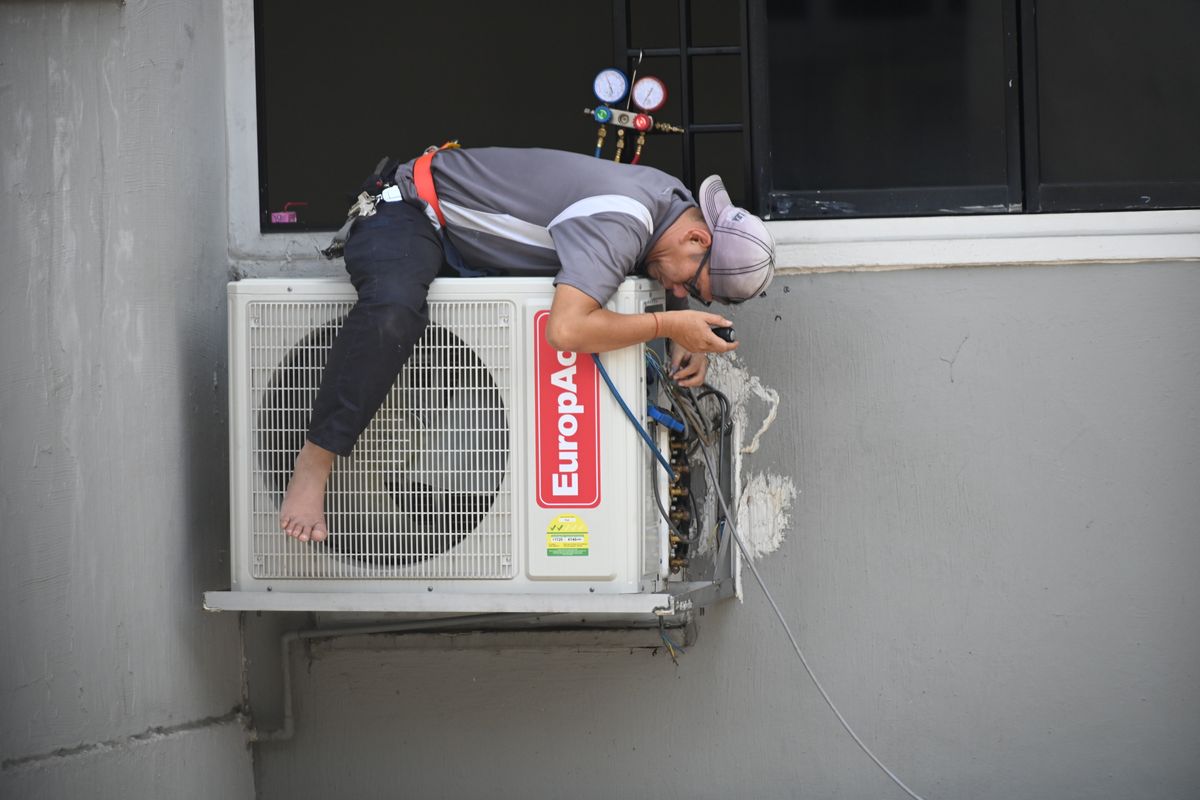
Photo: Richard Low Hong via Pexels
SBA 7(a) is the dominant financing path for plumbing and HVAC contractors — equipment, service vehicles, acquisitions, and facilities. The sector benefits from aging infrastructure demand and a licensed-trade supply constraint. Here’s how lenders evaluate these files.
Answer 6 questions. Get matched with plumbing- and HVAC-experienced SBA lenders.
Skip to program details →New to SBA? Start with SBA loan requirements.
SBA 7(a) loans to plumbing, heating, and air-conditioning contractors (NAICS 238220), fiscal years 2020 through December 2025. Pulled from SBA FOIA 7(a) dataset.
SBA 7(a) handles most plumbing and HVAC acquisitions and expansion needs. SBA 504 adds long-term fixed rates when real estate is part of the deal. Equipment financing is the non-SBA alternative for speed.
Right for: shop acquisitions, fleet expansion, real estate combined with the operating business.
Right for: buying the yard or shop real estate. Fixed long-term rates on the real-estate portion.
Right for: fleet additions, diagnostic tool upgrades, working capital under $500K.
Right for: service vehicles, diagnostic equipment, HVAC recovery units. Faster than SBA for fleet replacement.
Plumbing and HVAC SBA lending is the largest single-trade category in the SBA portfolio — the sector benefits from non-discretionary demand, equipment-backed collateral, and a licensed-trade barrier to entry. Charge-off performance sits close to the SBA average at 1.32%, with solid recovery economics when loans do fail because service trucks and equipment retain resale value.
Lenders verify that the operator (or an operating partner) holds the state-required trade license. Master plumber licenses, HVAC contractor licenses, EPA Section 608 refrigerant certification, and state-specific plumbing and mechanical licenses all matter. A non-licensed buyer acquiring a plumbing or HVAC business typically needs a documented management agreement with a licensed operator or a qualifying partner on the ownership team. Underwriting moves materially faster when the licensing picture is clean upfront.
A mid-size plumbing or HVAC operation runs 4 to 20 service trucks at $40K to $80K each fully equipped, plus inventory, diagnostic equipment, and specialty tools. Fleet and equipment value commonly represents 30-60% of total business assets and serves as collateral-strong security on the loan. Lenders value this profile; recovery on defaulted plumbing and HVAC loans is consistently stronger than on comparable service businesses without physical-asset backing.
Lenders want to see the split across emergency service calls (higher margin, unpredictable timing), scheduled service contracts (maintenance agreements, commercial contracts — predictable recurring revenue), and new construction / installation (larger tickets, longer sales cycles). A contractor with a meaningful base of maintenance contracts underwrites better than a pure emergency-service shop because revenue visibility is better.
Residential HVAC equipment sold in 2005-2015 is reaching end-of-life now; the same is true for plumbing fixtures, water heaters, and commercial systems installed during earlier building cycles. Lenders aware of this replacement-cycle tailwind take a constructive view of contractor deals even in categories with otherwise flat top-line growth.
Franchise operators account for 4.78% of plumbing and HVAC SBA loans — a real but minority share. Common franchise brands include the national Benjamin Franklin Plumbing / One Hour Heating & Air / Mister Sparky family and other trade-franchise concepts. When the franchise is in the SBA Franchise Directory, brand-level underwriting is already complete and lenders focus on the operator and market.
The industry leans heavily independent. Multi-generation family-owned shops are a meaningful share of the acquisition target universe, with senior owners transitioning to younger family members or to experienced technicians who worked for them. These transition-driven acquisitions are favorable SBA files because the buyer knows the customer base, the staff, and the market before the loan closes.
Plumbing and HVAC SBA 7(a) charge-offs run at 1.32%%, compared to the all-industry SBA average of 1.36%% — a 0.97x ratio, roughly in line with the SBA average. The collateral-strong equipment profile keeps recovery strong when loans do fail, and when failures happen the average months-to-charge-off runs longer than most industries — operators typically cover debt service for 30+ months before the business fully collapses.
The recent trend deserves honest note: trailing 12-month loan volume is down meaningfully from the prior 12 months, reflecting a broader commercial-construction slowdown and residential-replacement deferral as consumers stretch equipment life during higher-rate periods. The longer-term trajectory remains supported by aging infrastructure; the near-term variance is real. Lenders remain engaged on these deals but are asking more questions about forward pipeline than they did 18 months ago.
The ten banks that have approved the most SBA 7(a) plumbing and HVAC loans FY2020-2025. Pulled directly from SBA FOIA data. Loan count alone doesn’t capture lender fit for your specific deal — volume leaders and specialist fit can differ.
Top 10 lenders account for approximately 46.8% of all plumbing and HVAC SBA 7(a) volume.
The eight states leading in plumbing and HVAC SBA 7(a) approvals FY2020-2025. CA leads the next-largest state (FL) by roughly 1.18× on loan count; top 8 states account for roughly half of all national plumbing and HVAC SBA volume.
Adjacent SBA lending pages with shared underwriting mechanics or audience overlap for plumbing and HVAC borrowers.
Plumbing and HVAC SBA is a narrow specialty. The top ten lenders above handle a meaningful share of all plumbing and HVAC 7(a) volume — matching there vs. a generalist branch is the difference between a clean 60-day close and a stalled file. See the broader SBA loans hub or SBA acquisition mechanics.
Match with plumbing and HVAC SBA lenders →MMM does not originate SBA loans. Applications are processed through SBA-authorized lenders. Statistics above are sourced from the SBA FOIA 7(a) dataset, fiscal years 2020 through December 2025.