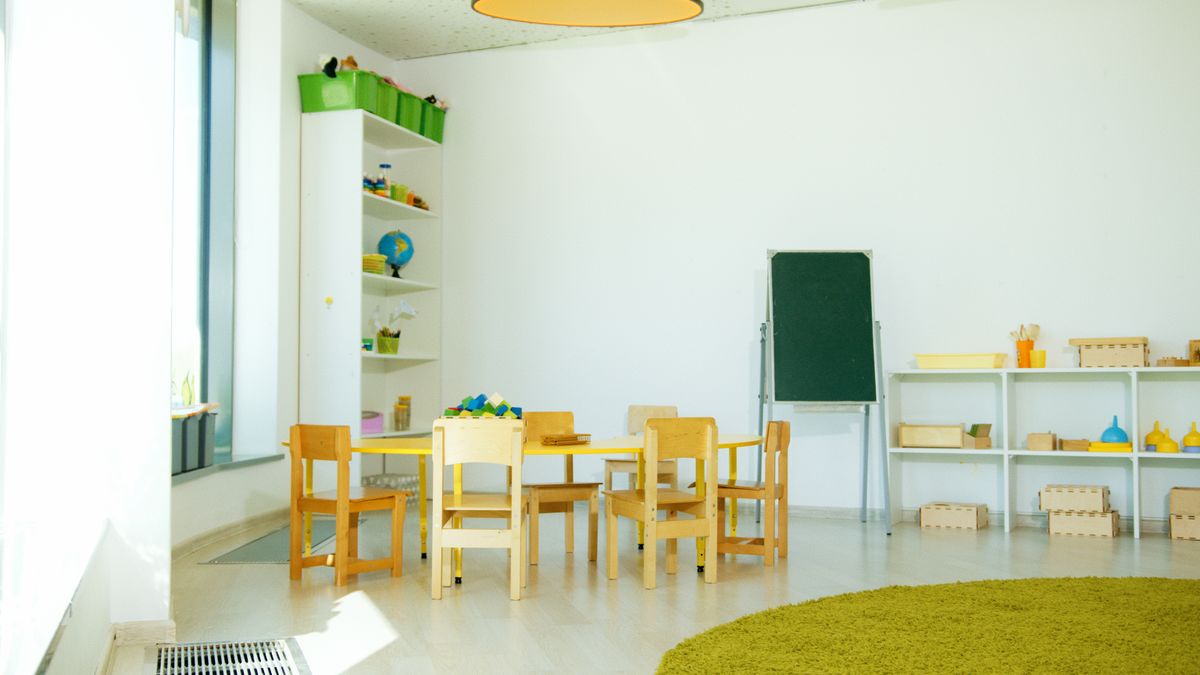
Photo: Artem Podrez via Pexels
Child care and daycare SBA lending has a 0.51% charge-off rate, roughly one-third the SBA average. Licensing, facility financing, and enrollment-forward revenue underwriting make these files more technical than most, but the performance profile is favorable.
Answer 6 questions. Get matched with child-care-experienced SBA lenders.
Skip to program details →New to SBA? Start with SBA loan requirements.
SBA 7(a) loans to child day care services (NAICS 624410), fiscal years 2020 through December 2025. Pulled from SBA FOIA 7(a) dataset.
SBA 7(a) handles most child care acquisitions and expansion needs. SBA 504 adds long-term fixed rates when real estate is part of the deal. Equipment financing is the non-SBA alternative for speed.
Right for: center acquisitions, facility buildouts, multi-location expansion.
Right for: buying the center facility. Fixed long-term rates on the real-estate portion.
Right for: equipment upgrades, playground improvements, working capital for staff ramp under $500K.
Right for: classroom equipment, playground buildouts. Faster than SBA when timeline matters for enrollment cycles.
Child care SBA underwriting is specialized because the business sits at the intersection of heavily regulated licensing, facility-driven capital requirements, and enrollment-based revenue economics. The 0.51% charge-off rate — roughly 0.38x the SBA average — reflects favorable underlying economics despite the regulatory complexity.
Every state regulates child care facilities differently: staff-to-child ratios, square footage per child, physical facility requirements (fenced outdoor space, dedicated classrooms by age band), background check and training requirements for staff. Lenders review the current licensure status, capacity under license, and any pending regulatory issues as part of underwriting. A change of ownership sometimes triggers license re-inspection, which can delay the closing by weeks — structure the deal to anticipate this.
Child care is facility-heavy. Typical centers require 3,000 to 15,000 square feet of dedicated space with age-specific classrooms, outdoor play area, kitchen facilities if meals are served, and state-mandated safety features. Acquisition of an existing center often includes the real estate or a long-term lease, and new-center buildouts commonly run $500K to $2M in tenant-improvement cost on top of any real estate acquisition. SBA 504 handles the real estate portion; SBA 7(a) handles the operating business — combined structure is the norm on deals including the building.
Unlike most businesses, child care revenue is forward-bookable: parents enroll children for 9-12 month programs, paying tuition weekly or monthly. Lenders want to see current enrollment vs. capacity, the waiting-list depth, and historical enrollment retention. A center at 90% of licensed capacity with a waiting list underwrites very differently from a center at 60% capacity with enrollment gaps across multiple age bands.
Many centers participate in state Child Care Development Fund programs, Head Start, or state-specific subsidy systems. These add revenue stability but also administrative complexity and reimbursement timing considerations. Lenders with child care experience navigate this routinely; generalist lenders sometimes stumble on the subsidy-revenue analysis.
Franchise operators represent 20.06% of child care SBA loans — meaningfully higher than most professional-services industries. Major franchise brands in the SBA data include the Primrose / KinderCare / Goddard / Kiddie Academy category and multiple regional concepts. Franchise centers get a brand-level underwriting shortcut if the franchise is listed in the SBA Franchise Directory, and they benefit from established curriculum, marketing, and operational systems. See our SBA franchise guide for franchise-specific mechanics.
Independent centers take the full underwriting path: licensing verification, facility diligence, enrollment and retention review, and operator experience evaluation. Experienced independent operators with a proven track record at prior centers underwrite well. First-time operators face a harder path without a franchise curriculum backbone or without a state-recognized certification in early childhood education on the ownership team.
Child care charge-offs run at 0.51%%, compared to the SBA average of 1.36%% — a 0.38x ratio. The favorable performance reflects three structural features: enrollment-based revenue (parents commit to 9-12 month cycles, reducing month-to-month volatility), licensing barriers to entry (new competition can’t open quickly), and subsidy program stability (participating centers have a cushion against local economic downturns).
When loans do fail, the causes cluster around enrollment collapse (a major local employer leaves, a new competing franchise opens nearby, reputation damage from a licensing violation), facility issues (unexpected structural problems or code requirements drain reserves), or staff crisis (inability to hire qualified staff at required ratios forces capacity reduction). Lenders with child care experience underwrite specifically around these risks, which is why specialist lender match affects outcome quality.
The +17% YoY growth in SBA lending to child care centers reflects a real market expansion: persistent demand exceeding supply in most markets, post-pandemic re-opening investments, and consolidation as independent centers sell to larger operators or franchise groups.
The ten banks that have approved the most SBA 7(a) child care loans FY2020-2025. Pulled directly from SBA FOIA data. Loan count alone doesn’t capture lender fit for your specific deal — volume leaders and specialist fit can differ.
Top 10 lenders account for approximately 32.2% of all child care SBA 7(a) volume.
The eight states leading in child care SBA 7(a) approvals FY2020-2025. TX leads the next-largest state (FL) by roughly 1.29× on loan count; top 8 states account for roughly half of all national child care SBA volume.
Adjacent SBA lending pages with shared underwriting mechanics or audience overlap for child care borrowers.
Child care SBA is a narrow specialty. The top ten lenders above handle a meaningful share of all child care 7(a) volume — matching there vs. a generalist branch is the difference between a clean 60-day close and a stalled file. See the broader SBA loans hub or SBA acquisition mechanics.
Match with child care SBA lenders →MMM does not originate SBA loans. Applications are processed through SBA-authorized lenders. Statistics above are sourced from the SBA FOIA 7(a) dataset, fiscal years 2020 through December 2025.